Workshop intake · 06
Build the part
you can explain.
Nuxepalo is a software engineering course studio for learners who want to understand architecture, ship working systems and defend every handoff.
Course positionPractice before polish.
 Foundry floor · Current cohort
Route builder
Choose a route through the workshop.
Select your goal, current experience and available rhythm. The route states the first build, review focus and prerequisite you should confirm.
WEB SYSTEMS · STARTER · STEADY
Begin with one complete request path.
Build a small interface, trace one request through the server and store one real record before adding scale.
- Review focus
- Can you explain each boundary without framework jargon?
- Confirm first
- Basic HTML, CSS and JavaScript syntax.
 Studio practice · 02
Inside the studio
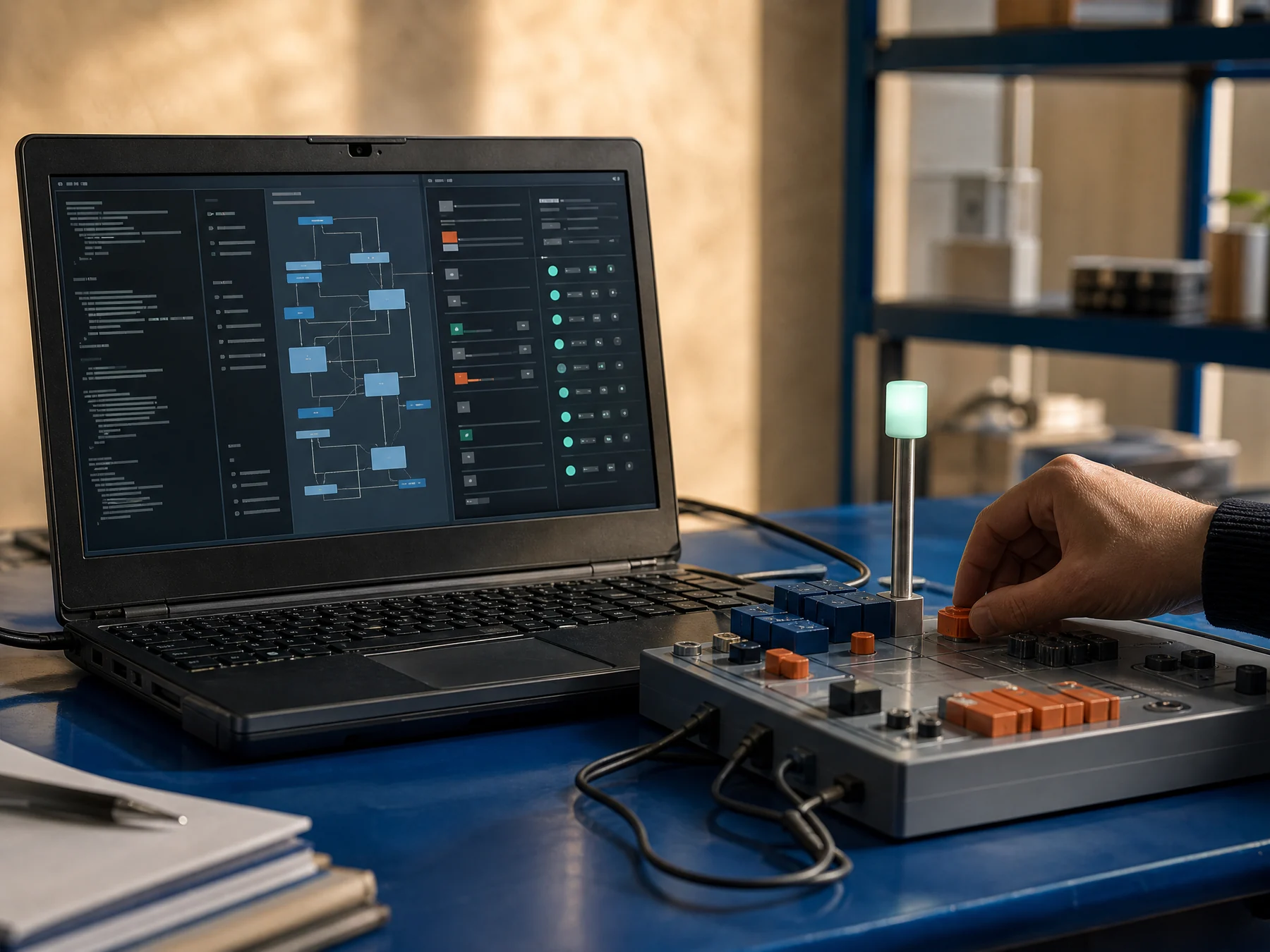
See the system before you change it.
Every workshop begins with orientation: current behaviour, ownership, interfaces and failure paths. Learners practise asking precise questions before writing a replacement.
Trace
Follow data across browser, service, queue and store.
Reproduce
Turn an unclear report into a repeatable failing case.
Explain
Document the decision, boundary and remaining risk.
Module press
Rotate the wall. Inspect a different layer.
MODULE 01
Foundations: make runtime behaviour visible.
Read requests, state, errors and browser behaviour without depending on a single framework.
- Inspect network and console evidence.
- Model state and side effects.
- Write a small debugging narrative.
 Topology wall · Live map
Lab bench
Every concept leaves a working artifact.
Labs are not isolated coding exercises. Each one starts from an incomplete system and ends with a testable change, review note and handoff.
Connect a form, server route, validation and storage layer.
Reproduce and classify errors before proposing a fix.
Ship a narrow feature with tests and review notes.
State risk, rollback condition and verification steps.
Project bays
Inspect, repair, then ship.
Filter the project floor. Every bay names a concrete artifact and the evidence required at review.

Inspect
Dependency material study
Map what enters the system, what owns it and what must remain stable during change.
Repair
Service handoff failure
Reproduce an unreliable transition, add observable evidence and repair the narrowest responsible boundary.
Fix the boundary you can verify.

Ship
Release-ready interface
Deliver one coherent experience across viewports with tests, risk notes and a reviewable deployment path.
Review ladder
Move from draft to accountable delivery.
Slide through five review gates. Each stage states the artifact, question and evidence expected before moving on.
Sketch
Draw the boundary before the components.
Name the user, request, owning service and visible outcome in one page.

 Field notebook · 08
Field notes
Read the reason behind the rule.
Search the workshop notes or open each answer. The notes explain scope, prerequisites, review practice and honest limits.
No note matches that search. Clear the field and try another term.
You should be comfortable navigating files, using a terminal, reading basic JavaScript and describing a small web request. The route builder identifies gaps but does not replace those foundations.
No. Frameworks appear where useful, but the course centres on runtime behaviour, boundaries, data flow, testing and delivery decisions that transfer between stacks.
Feedback is attached to a working artifact. Reviewers identify the observed behaviour, the unclear decision and the smallest revision that would make the handoff more accountable.
A completed lab includes a runnable change, a test or verification path, a short architecture note and a clear statement of what remains outside scope.
No. Nuxepalo develops practical engineering habits and reviewable project evidence, but hiring outcomes depend on prior experience, market conditions, location and the learner’s wider job search.
The steady route assumes six to eight focused hours. Intensive routes require more protected time and should not be chosen if review, revision and documentation would be rushed.
Workshop application
Describe the system you want to understand.
Share your current experience, available rhythm and one technical boundary that still feels unclear. The form is an expression of interest, not an enrolment guarantee.